
Storytelling: Indigenous Ways of Knowing, Being, and Teaching
This website explores storytelling as a pedagogical approach, with a focus on Indigenous perspectives and relational ways of learning. It aims to support educators in understanding how storytelling can foster connection, engagement, and meaningful learning experiences in early childhood and classroom settings.
Storytelling is more than a teaching “tool”; it is a sophisticated pedagogical framework grounded in the interconnectedness of all living things. In Indigenous contexts, stories are living entities that carry the laws, histories, and values of a people. They function not only as a form of communication, but also as a way of knowing, teaching, and sustaining relationships within communities.
Through storytelling, educators can move away from a traditional “banking model” of education toward a relational approach. In this space, knowledge is co-created through the dynamic interaction between the teller, the listener, the story, and the Land (Kirkness & Barnhardt, 1991; see References).
In practice, this shift means moving from directing learning to facilitating shared meaning-making through stories.
Jo-Ann Archibald (2008) writes: “Stories have the power to make our hearts, minds, bodies, and spirits work together.”
This concept of Storywork reflects a holistic view of learning. Stories do more than share information; they invite learners to think, feel, and reflect, making meaningful connections to community and culture. Indigenous methodologies emphasize that learning is deeply relational and shaped by the context of place (Archibald, 2008; see References).
Relational and caring approaches to storytelling support student engagement and long-term learning outcomes by validating the "learning spirit" within every student (Battiste, 2013; see References).
Respectful note: This site is created for educational purposes. It does not represent the teachings or cultural protocols of any specific Nation. Readers are encouraged to learn from local communities, Elders, and Knowledge Keepers whenever possible.
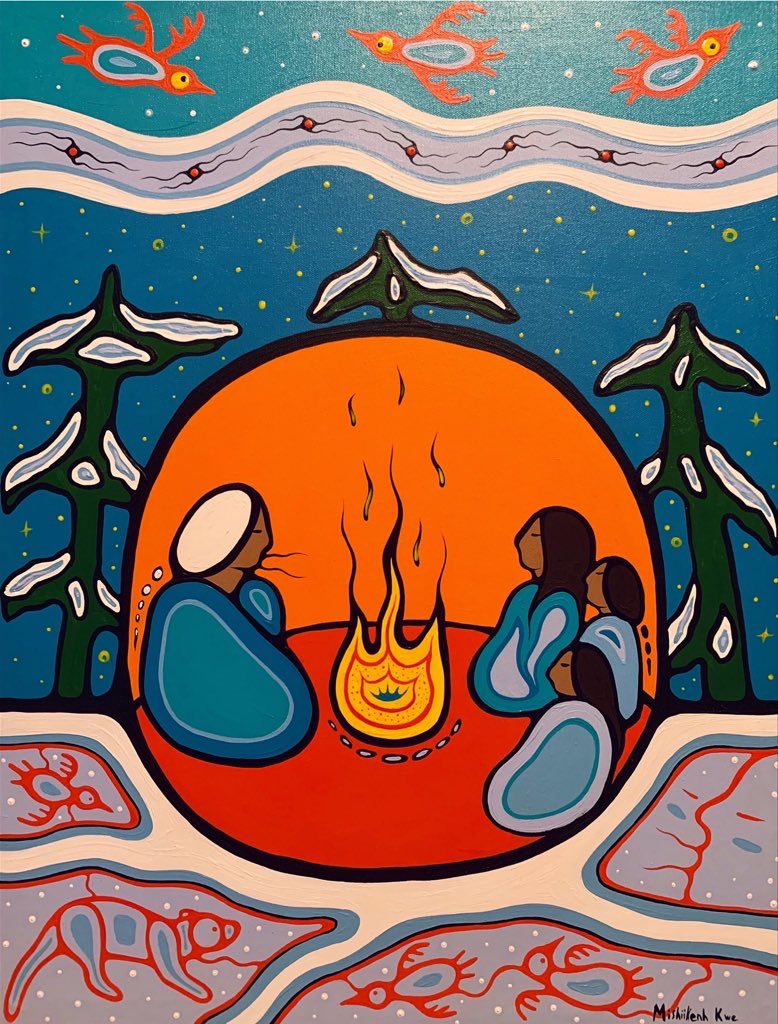
Storytelling and teaching
Learn how "Storywork" carries teachings, values, and ancestral knowledge across generations.
Explore Teaching Through Story →Storytelling as pedagogy
Explore how storytelling supports the seven principles of Indigenous Storywork: respect, responsibility, reciprocity, reverence, holism, interrelatedness, and synergy.
Explore pedagogy →Applications in practice
Discover how educators can move from "theory to action" in classroom and early childhood settings.
Explore applications →Why storytelling matters
Storytelling encourages learners to explore ideas through narrative rather than isolated facts. It supports deep, attentive listening, helping learners connect knowledge to their own experiences, relationships, and the natural world.
In many Indigenous perspectives, storytelling reflects relational values often described as the “Four R’s”: respect, relevance, responsibility, and reciprocity. In this way, knowledge is not simply transmitted, but shared, lived, and connected to community.
About this website
This website explores Indigenous storytelling as a pedagogical approach in early childhood education. It highlights how storytelling supports relational learning, cultural identity, and inclusive practice. [Learn more → About page]